
Australia · Sydney
Your first weeks in Sydney
A practical start in Australia's biggest city: which areas suit a newcomer, how to get around by train, ferry and bus, where to look for work, and how to keep costs in check.
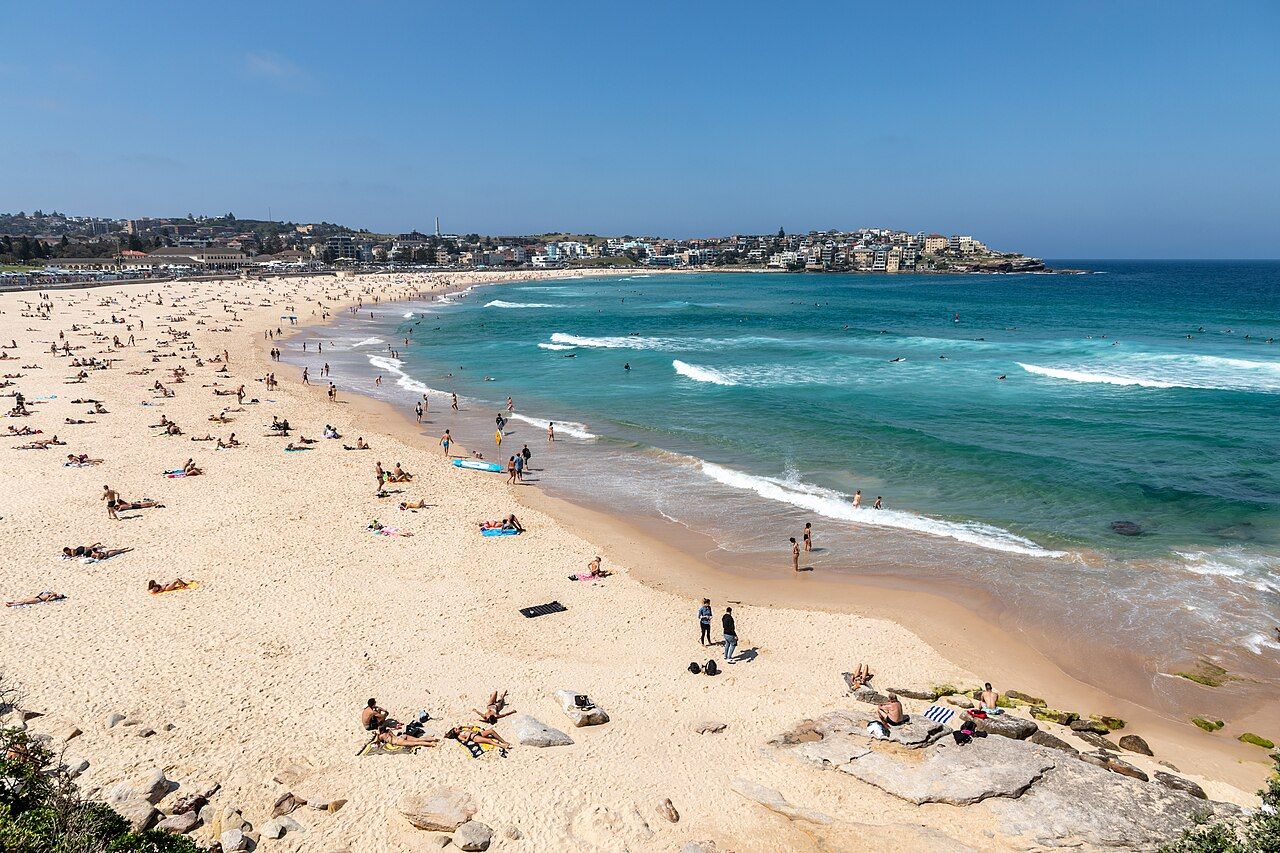 By Dietmar Rabich (cc-by-sa) original
Sydney is where most working holidays in Australia begin, and for good reason. It has the most flights, the most jobs and the widest choice of rooms. It is also expensive, spread out and busy, and the first fortnight can feel like a race against your savings. The aim of this guide is simple: get you housed, working and oriented before the money starts to run thin.
Before you fly, check the conditions of your visa on the official immigration website. Working holiday schemes differ by passport, and the rules on age, length of stay and extensions change from time to time. Keep a copy of your grant letter with your passport.
Where newcomers base themselves
Most people spend their first nights in a hostel or short let while they look for something longer. Where you stay shapes your whole first month, so think about the kind of work you want and how far you are willing to travel each day.
The eastern beaches
Bondi, Coogee and Bronte draw a lot of newcomers. The appeal is obvious: sand, ocean pools and a coastal walk that links the beaches along the clifftops. Rooms here are in demand and shared rooms are common. The trade-off is the commute, since the beaches have no train line of their own and you rely on buses or a bus to the nearest station.
The inner west and the city fringe
Newtown, Enmore, Glebe, Surry Hills and the streets around them suit people who want bars, live music and a short trip into the city. Terraced houses split into share rooms are the usual setup. Train and bus links are good, and many hospitality jobs are within walking distance.
The north side
Manly, across the harbour, has its own beach and a ferry to Circular Quay. The lower north shore around North Sydney is quieter and closer to office districts. Both are worth a look if you prefer a calmer base.
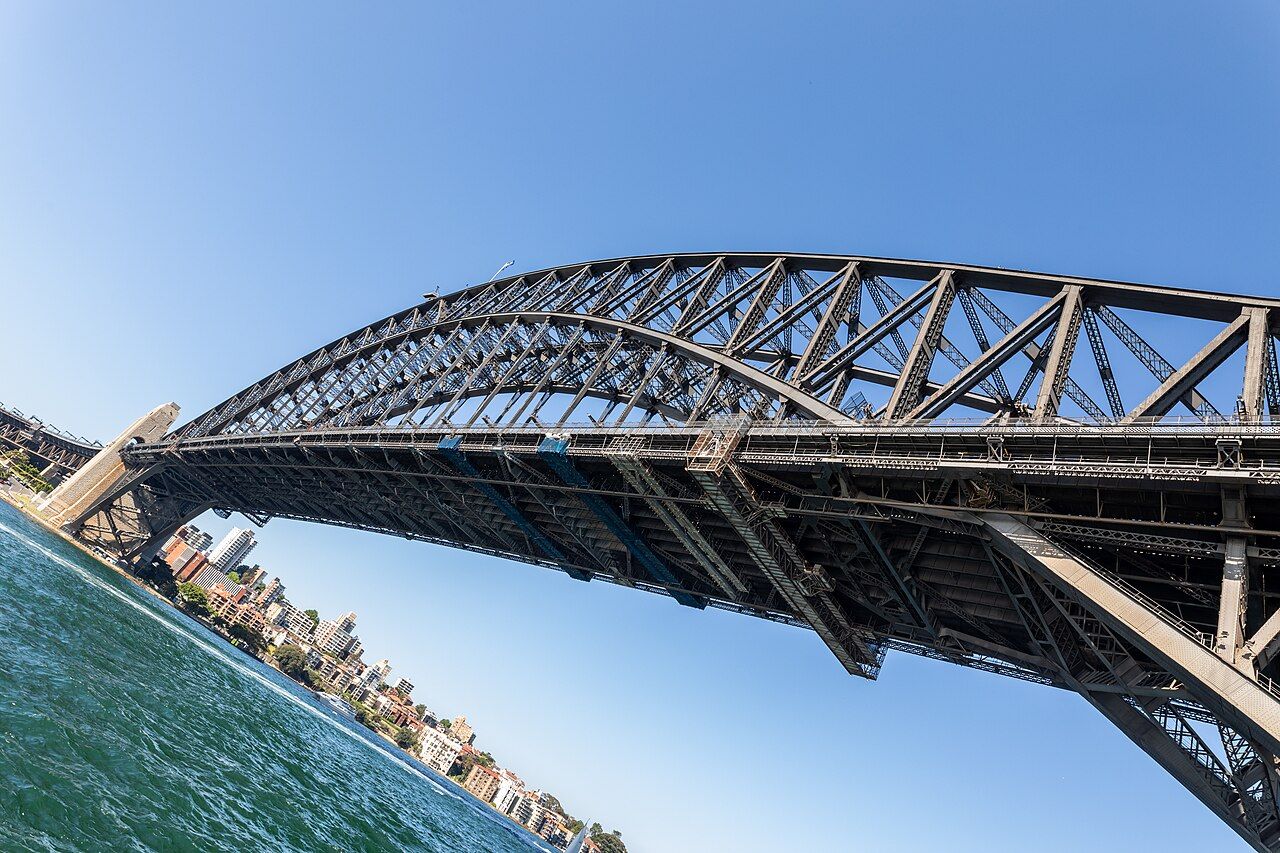 By Dietmar Rabich (cc-by-sa) original

Getting around by train, ferry and bus
Sydney's public transport is run by the state, and you pay by tapping on and off at gates and readers. A contactless bank card or phone works, as does the city's own transport card. Fares are capped across a day and a week, so heavy users are not punished, but check the current fare rules on the official transport website because they change.
Trains cover the city centre, the inner west, the north shore and the outer suburbs. The metro adds driverless lines in some corridors. Buses fill the gaps, especially to the eastern beaches. Light rail runs through the city centre and out towards the southeast.
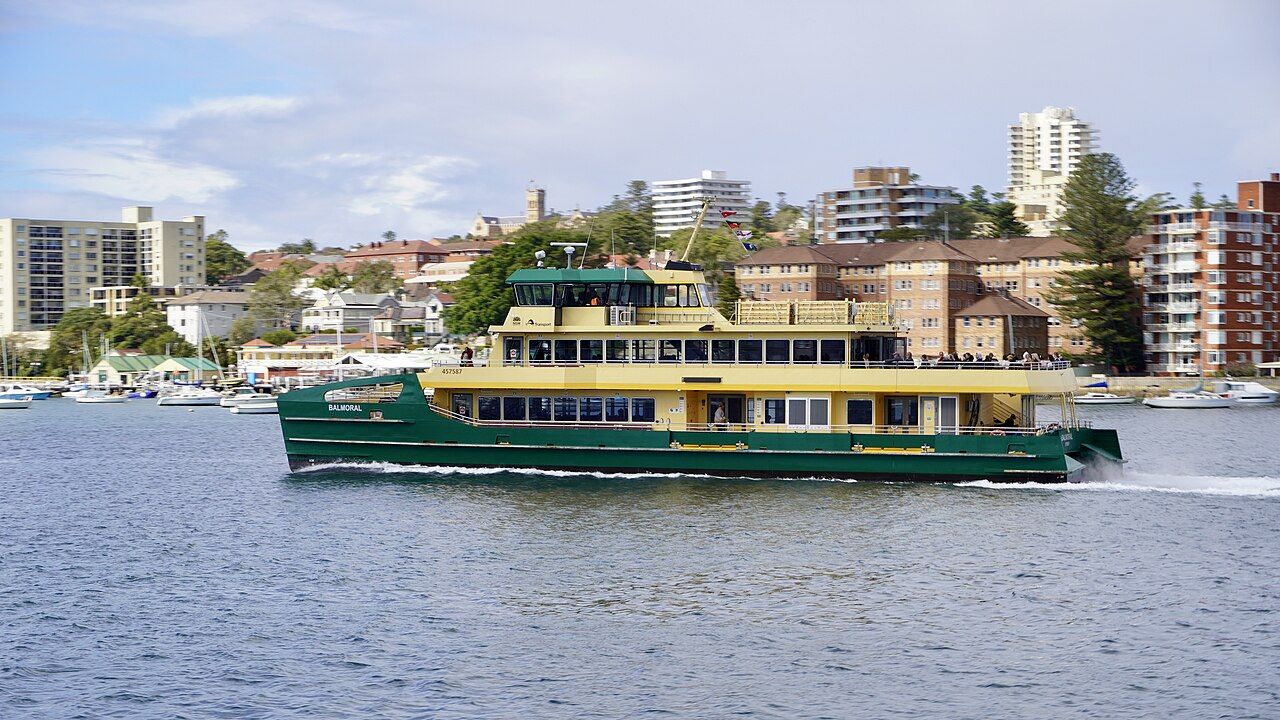 By Zax71 (cc-by) original

The ferries are the part most people remember. Boats leave Circular Quay for Manly, Taronga, Balmain, Parramatta and other wharves, and they use the same tap-on system as trains. A ferry ride is a commute and a sightseeing trip at once, and on a clear morning there is no better way into the city.
Driving in Sydney is rarely worth it in your first weeks. Parking is scarce and toll roads add up. If you do drive, remember Australia drives on the left, and give yourself time to adjust before taking on busy junctions.
Finding a room without losing your deposit
Share rooms are the normal way to live in Sydney on a working holiday. You will see rooms advertised as private or shared, furnished or bare, with bills included or split. Ask what is included before you agree to anything.
Rental scams are common here. A favourite trick is a room that looks perfect, listed below the going rate, with a landlord who is overseas and asks for a deposit before you can see it. Never pay for a room you have not inspected in person. When you do pay a bond on a proper lease, New South Wales has an official scheme that holds it for you, so ask whether your bond will be lodged. Our guide to finding a room without getting scammed has the full checklist.
Also on the boardFinding a room without getting scammedRents in Sydney are high compared with most of Australia, and the closer you are to the water or the city centre, the more you pay. Plan on a share room taking a large part of your wages, and keep enough savings for a bond and a couple of weeks of rent in advance.
Jobs that hire quickly
Hospitality is the fastest way into work for most newcomers. Cafes, bars, restaurants and hotels hire all year, with peaks before summer and around big events. Walking in with a printed CV still works, especially on weekday mornings. Bar work in New South Wales needs a responsible service of alcohol certificate, and many venues will ask for it before a trial shift.
Office temping suits people with admin, reception or customer service experience. Recruiters place temps in short assignments, which fits the limits some visas put on how long you can work for one employer. Construction labouring needs a general safety induction card before you set foot on a site. Retail and events work pick up towards Christmas and the summer festival season.
Pay rates are set by industry awards and a national minimum wage, and casual workers usually receive a loading on top of the base rate. The detail matters and it changes. You also need a tax file number from the official tax authority to avoid being taxed at the highest rate, and employers pay superannuation into a fund in your name. The first-week checklist covers these steps in order.
Be wary of job ads that ask you to pay for training, uniforms or a placement up front, or that offer cash in hand with no payslip. Legitimate employers pay you, not the other way round.
The beaches, and living on a budget
Sydney's beaches are free, and they are the reason many people put up with the rent. Swim between the red and yellow flags, which mark the patrolled area where lifeguards watch the water. Rips are common on surf beaches and are hard to spot, so never swim alone at an unpatrolled beach. The sun is stronger than many visitors expect, even on cloudy days.
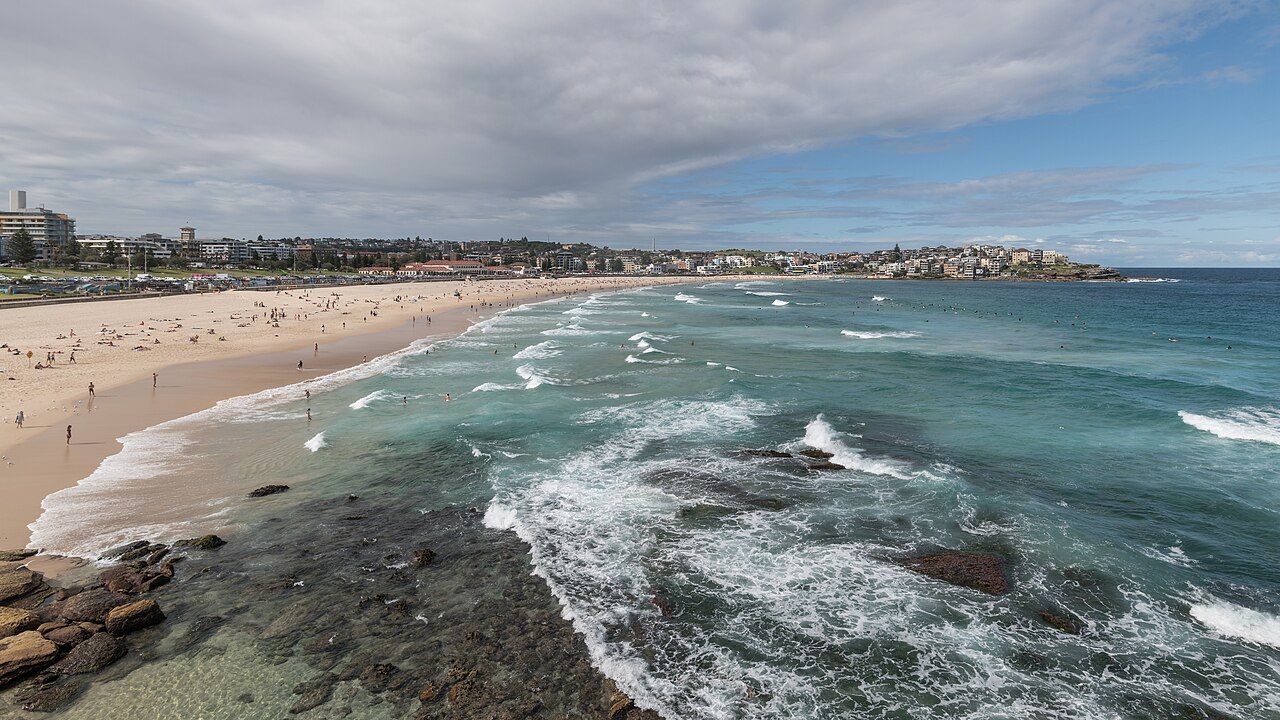 By DXR (cc-by-sa) original

The coastal walk from Bondi to Coogee is the classic free day out. Ocean pools along the coast give calmer swimming when the surf is up. The harbour foreshore, the Royal Botanic Garden and the walk across the Harbour Bridge cost nothing either.
Day to day, the costs that catch people out are rent, eating out and going out. Cooking in a shared kitchen and buying groceries from supermarkets rather than corner shops makes a real difference. Alcohol is taxed heavily, and a night out in the city adds up fast.
Plan your first month around the cost of a room, not the cost of a beer. Plan your first month around the cost of a room, not the cost of a beer. If savings start to run low before you find steady work, there is no shame in leaving. Plenty of people use Sydney as a landing pad, then move on to Melbourne and its share houses, or head out for regional and harvest work, which can also count towards a visa extension for some passports.
Give yourself two or three weeks to settle. By then most people have a room, a job and a favourite beach, and Sydney starts to feel like home rather than a waiting room.