
Australia · Cairns
Cairns and the tropical north
Reef trips, rainforest tours and a busy backpacker trade make Cairns a natural stop on a working year, as long as you respect the heat, the wet season and the wildlife.
 By 04marjess at English Wikipedia (public domain) original
Cairns sits on the coast of far north Queensland, between the Great Barrier Reef and the rainforest-covered ranges of the Wet Tropics. It is a working city as well as a tourist base, and for many working holiday makers it is a mix of both: a few months of hospitality or tourism work, with days off spent on the reef or in the hills. The climate shapes everything here, so start with the seasons.
Wet and dry
The tropical north has two seasons rather than four. The dry season usually runs from around May to October, with warm days, lower humidity and clear skies. This is peak tourist time, when most jobs are available and the town is busiest.
The wet season usually runs from around November or December to April. It brings heat, high humidity and heavy rain, often in short, intense downpours. Roads can flood and some tours stop running. Tourism quietens, and some businesses cut staff, so arriving at the start of the wet is the hardest time to find work.
Cyclones can form in the wet season. Most years Cairns is not directly hit, but you should take warnings seriously when they come. Follow the official weather service and local emergency advice, know where you would shelter, and keep water, food and a charged phone ready if a storm is forecast.
Reef and rainforest trades
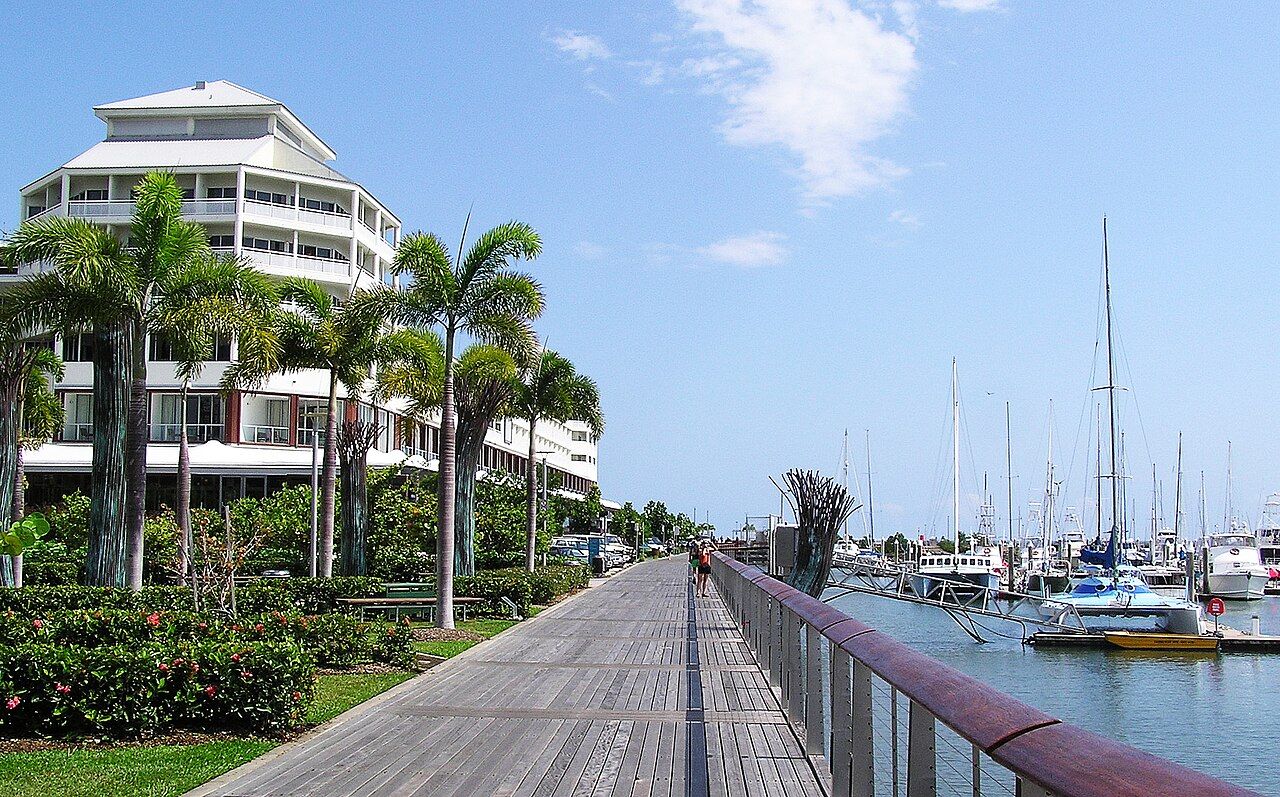
Tourism is the backbone of work in Cairns. Reef trips leave from the marina most mornings, and the boats need crew, hosts, cooks and, for dive operations, qualified instructors and divemasters. Diving roles usually require professional certification, and boat crew roles may require safety training.
 By Donaldytong (public domain) original

Tour sales desks, hostels, bars and restaurants employ large numbers of travellers. Rainforest tours head north towards the Daintree and Cape Tribulation and up to the Atherton Tablelands. Hotels and holiday apartments need housekeeping staff, especially in the dry season.
South of Cairns, around Innisfail and Tully, banana farms hire year round. Our guide to regional work and the harvest seasons explains what farm life involves.
Also on the boardRegional work and the harvest seasonsPay rates follow national industry awards.
The Esplanade and the lagoon
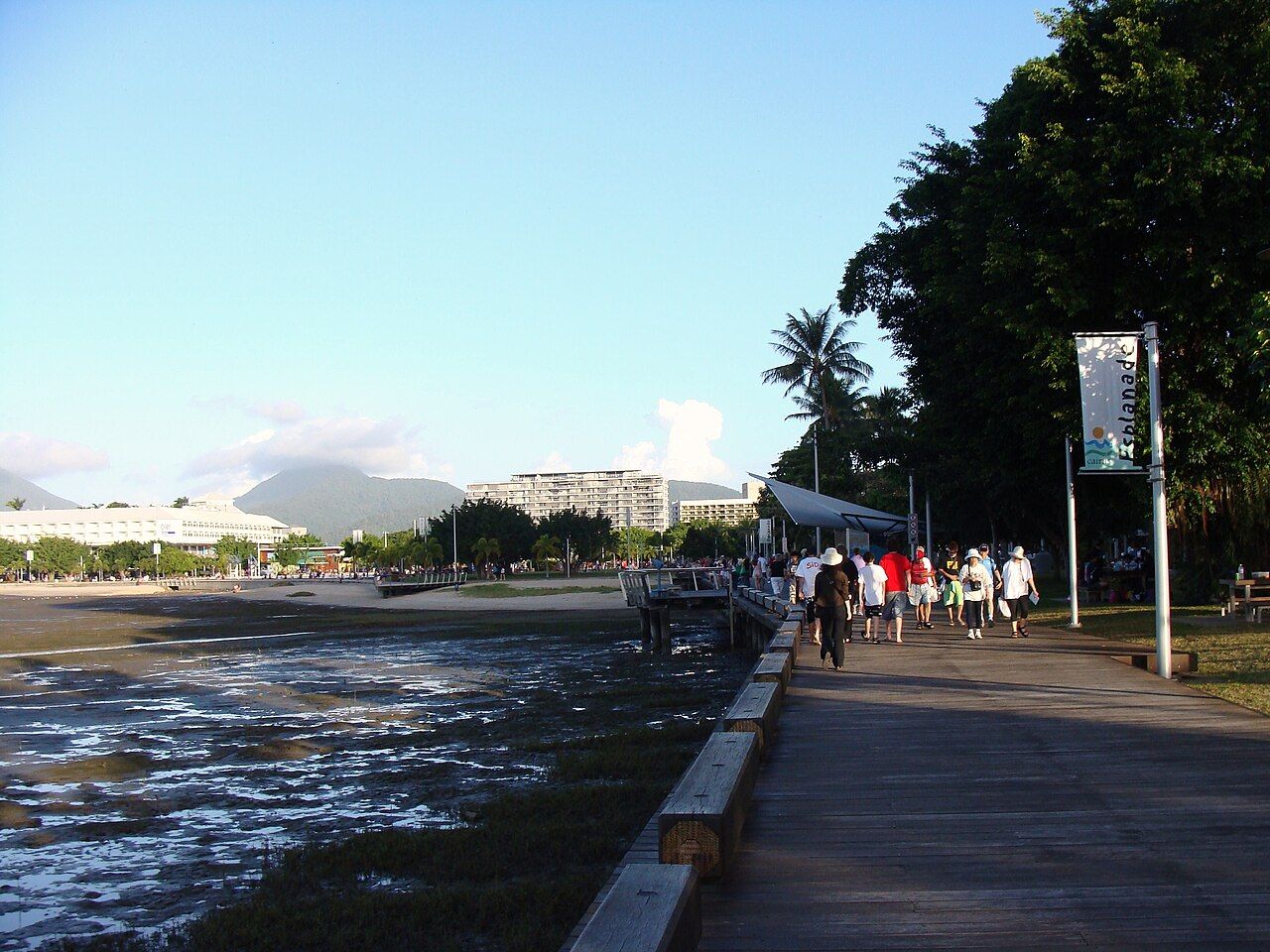
Cairns has no real swimming beach in the city itself. The waterfront is a long stretch of tidal mudflats, home to a large number of wading birds. Instead, the city built the Esplanade Lagoon, a large public saltwater pool beside the boardwalk, free to use and watched by lifeguards.
The Esplanade is where much of Cairns life happens. People walk, run and exercise along the foreshore, and there are barbecues, playgrounds and shaded lawns. It is also a good place to meet other travellers in your first days.
Beaches north of the city, along the coast towards Palm Cove and Port Douglas, are popular on days off. A car or a bus gets you there.
Stingers, crocodiles and other wildlife
The tropical north has wildlife that demands respect. None of it should stop you enjoying the place, but you need to follow the rules.
Marine stingers, including box jellyfish and the tiny Irukandji, are present in coastal waters, mostly in the warmer months, roughly November to May, though they can occur at other times. Their stings can be very serious. Swim only at patrolled beaches, inside stinger nets where they are provided, and wear a full-length stinger suit on reef trips. Learn where the vinegar stations are and what the signs mean.
Saltwater crocodiles live in rivers, creeks, estuaries, beaches and swamps throughout the region. Obey every warning sign. Do not swim in rivers or creeks, keep well back from the water's edge, and never feed or approach a crocodile. Be especially careful at dawn, dusk and at night.
 By Charles J. Sharp (cc-by-sa) original

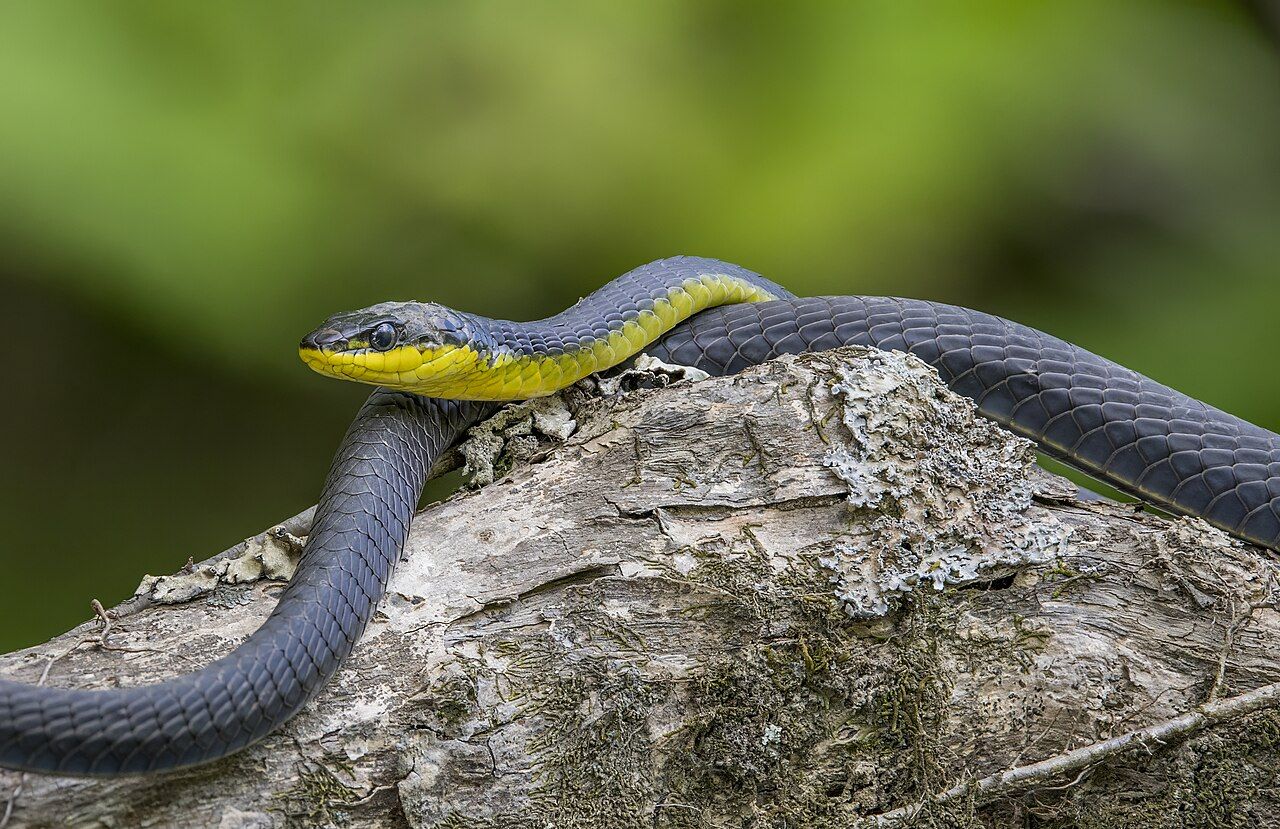
Snakes, spiders and cassowaries live in the rainforest. Most snakes are harmless and shy, but treat all of them with care. Keep your distance from cassowaries, which are large and can be dangerous if they feel threatened.
Living and moving on
Most travellers in Cairns stay in hostels or share houses in the city or nearby suburbs. In the wet season rooms are easier to find. In the dry season demand rises, so do not pay for any room you have not seen. Air conditioning or at least good fans matter in this climate.
Daily life in the heat takes some adjusting. Mould grows quickly in the wet season, so air out clothes and shoes. Mosquitoes can carry disease in the tropics, so use repellent and cover up at dusk. The sun is fierce all year, even on overcast days, and a hat and sunscreen are part of the daily routine for locals.
Cairns is a long way from the southern cities. The drive from Brisbane takes at least two long days, and many people fly instead. Some travellers come up from Sydney for the dry season and head south when it ends. Others continue west across the top of Australia towards Darwin, or drive the coast south through the Whitsundays.